
- Full digitalisation
- Wine merchant · Belgium
Wijnhandel Ghoos: one system for two very different customers,without losing the personal advice..
A wine merchant serving both professional catering clients and private individuals — two audiences, different needs, and no off-the-shelf webshop that could hold both. A custom catalogue and ordering system, designed around the thing that made them good: taking time to find the right wine.
Role
Strategic architect, analyst, builder
Scope
Digitalisation of ordering & catalogue
Focus
Dual-audience commerce · customer experience
The challenge
Two customer types. One business. No system that fit.
Wijnhandel Ghoos had been searching for a suitable webshop for a while — and kept coming up empty. The reason was structural: they serve restaurants and catering businesses and private customers, and those two audiences order differently, browse differently, and need different things. Standard webshop templates force you to choose one. They didn't want to choose.
What made it harder: their reputation was built on personal, human advice — taking the time to match the right wine to the right person. Any digital system that flattened that into a generic shopping cart would digitize away the very thing customers came for.
What I architected
Map the relationship first. Then build the system that holds both audiences.
We started with workshops, not software — mapping how Ghoos actually serves people, what their values mean at every contact moment, and which parts of the process could be simplified before anything got digitized. Structure first, build second.
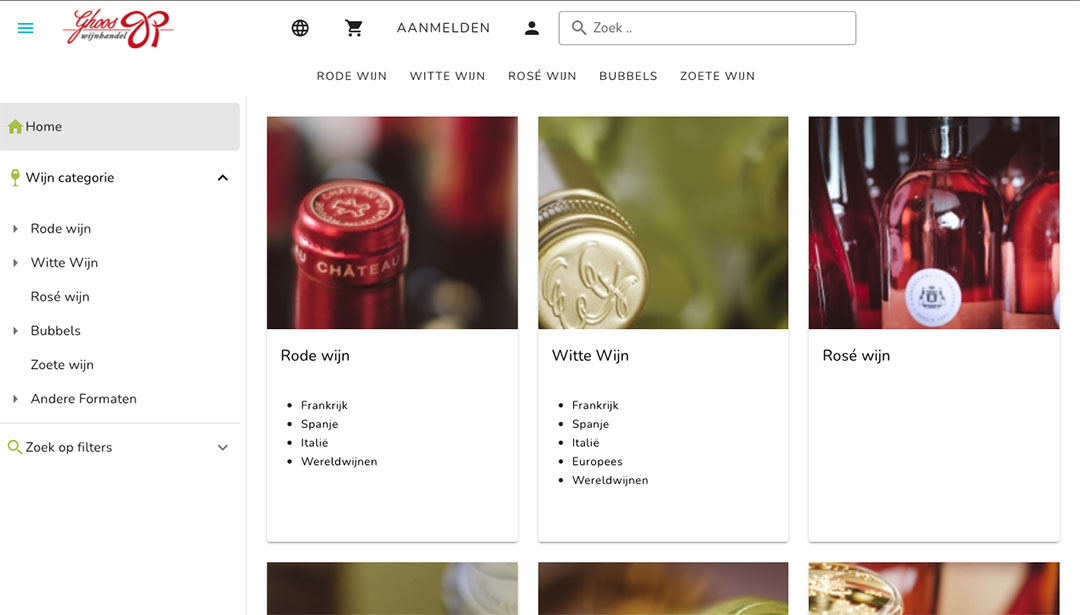
Then I designed and built the system: a new website and a custom wine catalogue that serves both worlds in one place — professional catering clients and private individuals — with categories and taste-based search so customers find wine the way they'd be advised in the store. Rolled out gradually, on a timeline the business could absorb.
(The same loop as every engagement: understand what fits, design what should exist, then automate on purpose.)
The outcome
The ordering runs itself. The time goes back to customers.
Routine ordering moved online — for both audiences, in one system built around how Ghoos actually works. The time that used to go into processing orders now goes where their reputation was built: personal advice and service. The digitalisation didn't replace the human relationship. It made room for it.
Build yours on the same thinking
Serving two audiences with systems built for one?
When your business doesn't fit the standard template, the answer isn't forcing it in, it's designing the structure that actually holds it.